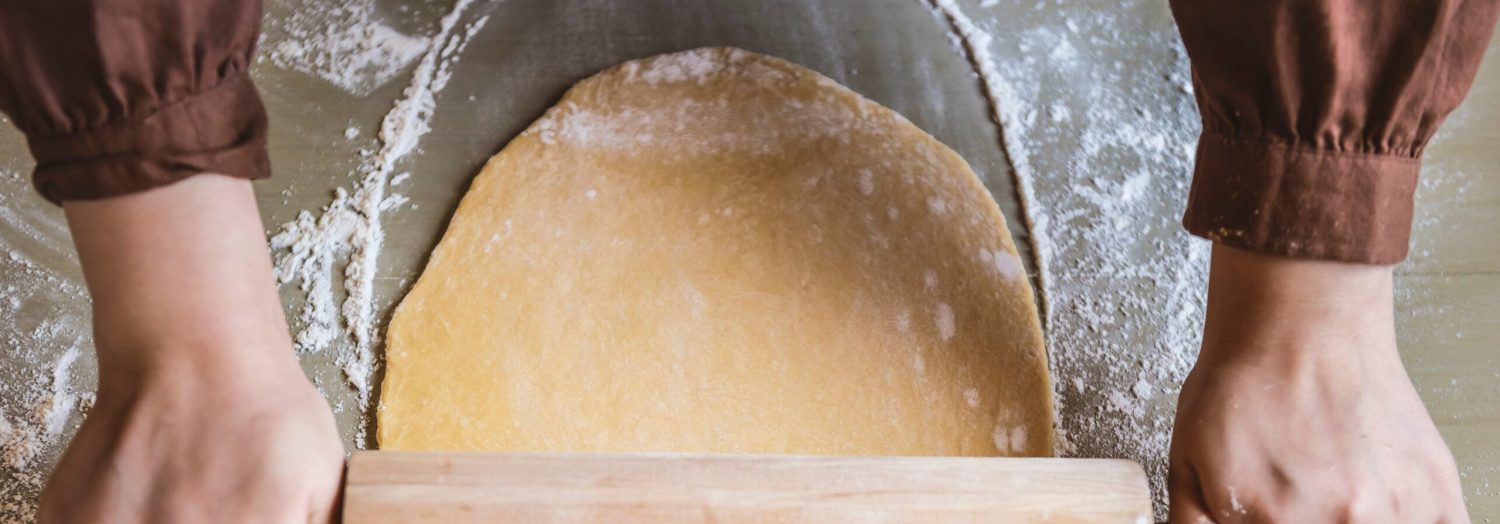
Rượu Cần, or Vietnamese communal jar wine, is a traditional beverage enjoyed during festivals and special occasions. This unique wine is made from glutinous rice and yeast, creating a sweet and slightly tangy flavor. The communal aspect of drinking from a shared jar with straws adds to the cultural experience, making it a memorable part of Vietnamese heritage.
The key ingredients for this recipe are glutinous rice and yeast. Glutinous rice is a type of rice that becomes sticky when cooked, essential for the texture of the wine. It may not be as common in some households, so look for it in the Asian foods section of your supermarket. Yeast is used to ferment the rice, turning it into wine. Make sure to get a packet specifically meant for brewing or wine-making.
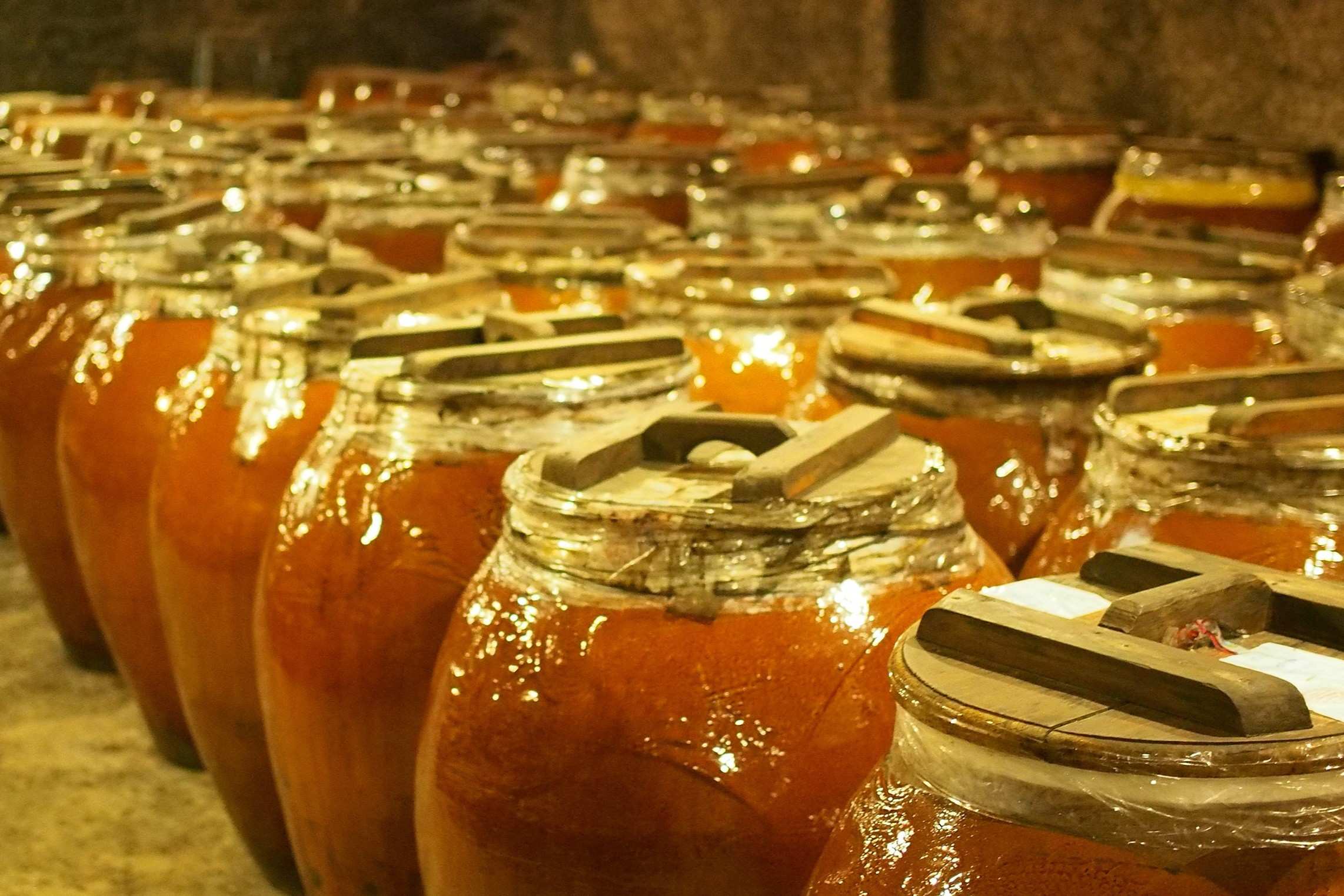
INGREDIENTS FOR Vietnamese Communal Jar Wine
Glutinous rice: This type of rice becomes sticky when cooked and is essential for the texture and flavor of the wine.
Yeast: Used to ferment the rice, turning it into wine. Ensure you get a packet meant for brewing or wine-making.
Water: Necessary for cooking the rice and aiding in the fermentation process.
Technique Tip for Making Rượu Cần
To ensure the best fermentation process, make sure the glutinous rice is fully cooled before mixing in the yeast. If the rice is too warm, it can kill the yeast and hinder the fermentation. Additionally, using a clean, sterilized jar will prevent unwanted bacteria from contaminating the wine.
SIDE DISHES
Substitute ingredients
glutinous rice - Substitute with sushi rice: Sushi rice has a similar sticky texture when cooked, making it a good alternative for glutinous rice in this recipe.
glutinous rice - Substitute with short-grain rice: Short-grain rice also becomes sticky when cooked, which can mimic the texture of glutinous rice.
yeast - Substitute with bread yeast: Bread yeast can be used as a fermentation agent similar to the yeast used in traditional Vietnamese Communal Jar Wine.
yeast - Substitute with wine yeast: Wine yeast is specifically designed for fermenting beverages and can be a suitable replacement for the yeast in this recipe.
water - Substitute with coconut water: Coconut water can add a subtle sweetness and complexity to the Vietnamese Communal Jar Wine.
water - Substitute with rice water: Using rice water, which is the starchy water left after rinsing rice, can enhance the flavor and authenticity of the Vietnamese Communal Jar Wine.
Other Alternative Recipes Similar to Rượu Cần
How to Store / Freeze Rượu Cần
- Ensure the wine is stored in a cool, dark place to maintain its quality. A pantry or cellar is ideal.
- Use airtight containers to store the wine after fermentation. This helps to preserve the flavor and prevent contamination.
- If you plan to keep the wine for an extended period, consider transferring it to smaller bottles. This minimizes exposure to air each time you open a container.
- Label each container with the date of fermentation. This helps you keep track of its age and ensures you consume the oldest batches first.
- For freezing, pour the wine into freezer-safe containers, leaving some space at the top for expansion. Seal tightly to prevent freezer burn.
- Thaw frozen wine in the refrigerator overnight before serving. Avoid using a microwave or hot water to speed up the process, as this can alter the flavor.
- Once thawed, consume the wine within a few days for the best taste. Re-freezing is not recommended as it can degrade the quality.
- If you notice any off smells or flavors, discard the wine. Proper storage should prevent spoilage, but it's always better to be safe.
How to Reheat Leftovers
- Gently warm the wine in a saucepan over low heat. Avoid boiling to preserve the delicate flavors.
- Use a double boiler to reheat the wine slowly, ensuring even heating without scorching.
- Microwave in short intervals, stirring frequently to maintain an even temperature and prevent overheating.
- Pour the wine into a heatproof container and place it in a warm water bath, allowing it to gradually reach the desired temperature.
- For a traditional touch, reheat the wine in a clay pot over a low flame, stirring occasionally to distribute the heat evenly.
Best Tools for Making Rượu Cần
Large pot: Used to cook the glutinous rice until it is fully cooked and sticky.
Wooden spoon: Handy for stirring the rice while it cooks to ensure even cooking.
Cheesecloth: Used to cover the jar during fermentation to allow airflow while keeping contaminants out.
Rubber band: Secures the cheesecloth over the jar to keep it in place.
Large jar: The container where the rice and yeast mixture will ferment for 30 days.
Straws: Used for communal drinking once the wine is ready.
Measuring cups: Essential for measuring the water and rice accurately.
Thermometer: Useful for checking that the rice has cooled to room temperature before adding the yeast.
How to Save Time on Making Rượu Cần
Cook the rice in a rice cooker: Using a rice cooker ensures perfectly cooked glutinous rice without constant monitoring.
Use pre-measured yeast packets: Pre-measured yeast packets save time and ensure the right amount is used.
Cool rice quickly: Spread the cooked rice on a large tray to cool it faster before mixing in the yeast.
Label the jar: Mark the fermentation start date on the jar to easily track the 30-day period.
Prepare multiple jars: Start several jars at different times to have a continuous supply of Vietnamese communal jar wine.
Vietnamese Communal Jar Wine (Rượu Cần) Recipe

Equipment
- Large Jar
- Cheesecloth
- Rubber Band
Ingredients
Main Ingredients
- 2 kg Glutinous Rice
- 1 packet Yeast
- 2 liters Water
Instructions
- 1. Cook the glutinous rice until fully cooked and sticky.
- 2. Let the rice cool to room temperature.
- 3. Mix the yeast into the cooled rice.
- 4. Transfer the mixture to a large jar.
- 5. Cover the jar with cheesecloth and secure with a rubber band.
- 6. Let it ferment in a cool, dark place for about 30 days.
- 7. After fermentation, the wine is ready to drink. Serve communally with straws.
Notes
Nutrition
More Amazing Recipes to Try 🙂
- Best Cooking Calculators for Recipe Conversions
- Vietnamese Clear Tapioca Dumplings (Bánh Bột Lọc) Recipe50 Minutes
- Vietnamese Soy Milk (Sữa Đậu Nành) Recipe8 Minutes
- Vietnamese Sticky Rice Balls in Ginger Syrup (Chè Trôi Nước) Recipe50 Minutes
- Vietnamese Salt Roasted Shrimp (Tôm Rang Muối) Recipe25 Minutes
- Vietnamese Fried Rice Flour Cakes (Bột Chiên) Recipe30 Minutes
- Vietnamese Steamed Fish with Ginger (Cá Hấp Gừng) Recipe35 Minutes
- Vietnamese Tamarind Stir-Fried Quail Balut (Trứng Cút Lộn Xào Me) Recipe35 Minutes



Leave a Reply